I was a voracious reader as a kid (always with my nose in a book).
When everyone else was paying attention in class (ya know, learning), I devoured books and novels like Wuthering Heights, Twilight, and A Great and Terrible Beauty.
A great movie or book captures you from the beginning. Once you’re hooked, stopping feels nearly impossible.
Can website content do that? Hook a reader so strongly that they simply must go on? Well, let’s not flatter ourselves. Website content isn’t that interesting.
But it should feel relatable, relevant, helpful, conversational, and approachable.
So what does it mean to capture someone’s attention? How exactly is that done?
It starts with a “hook.” Let’s chat about hooks to see how we might use them in our SEO content.
What’s in this article:
- How to Write Great Hooks.
- Your Audience is the Hero.
- Thinking Through Problems.
How to Write Great Hooks
It took me longer than I’d like to admit to understand what a “hook” was. But put simply, a “hook” is the opening sentence or headline that leads your reader to the next line.
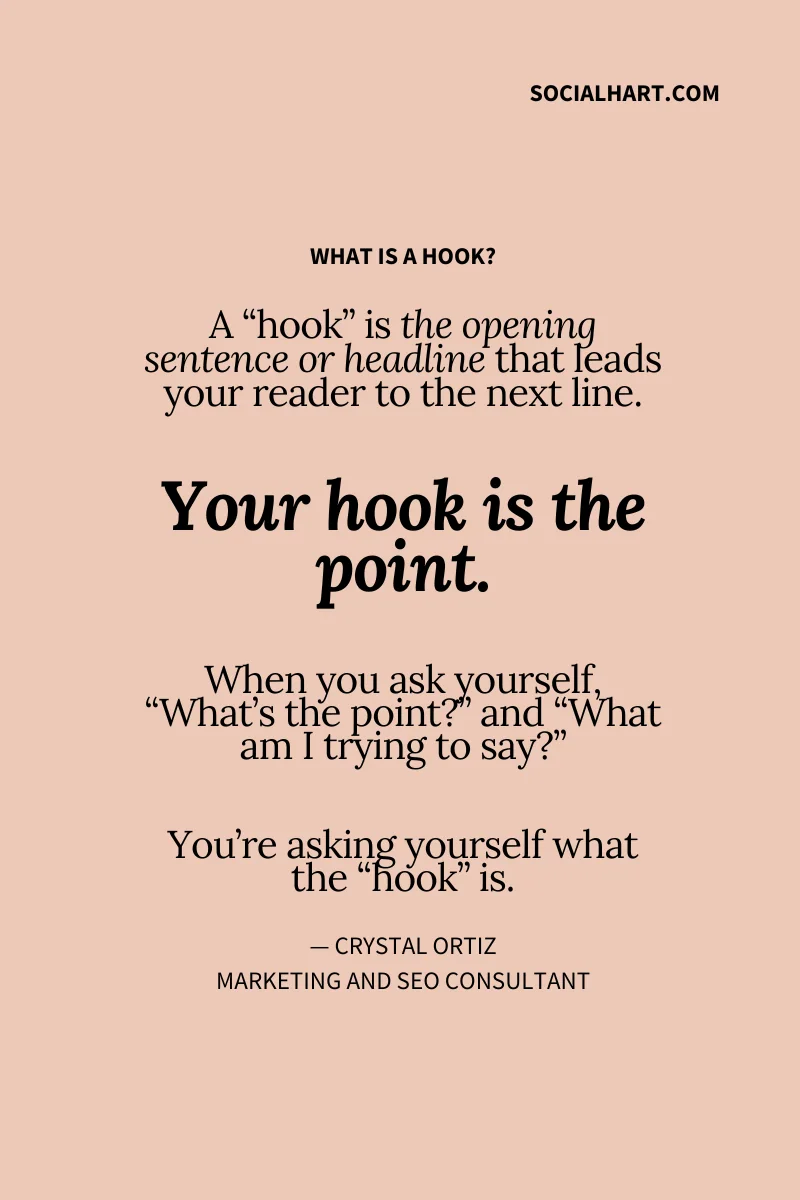
The easiest way I know how to explain is to say that your hook is the point.
When you ask yourself “what’s the point?” and “what am I trying to say?” You’re asking yourself what the “hook” is.
A few hook examples for this learning series might be:
- Writing great content takes mental stamina. Here’s how to build yours.
- Hitting your traffic goals isn’t as hard as it seems. All you need is a writing schedule like this.
- The best tools for writing helpful content make your life easier, not harder. Here’s how to keep it simple.
These “hooks” immediately tell you the point I’m trying to make with this article, and the specific sub-sections I’ve created. They immediately attract you and hook you so that you click into the article or next section.
Here’s how to write hooks better.
Your Audience is the Hero
First, remember that your audience is the hero. What will they benefit by reading your content?
Will this series, hopefully, you walk away with:
- How to write great hooks
- How to set up your writing station
- How to look beyond keywords for SEO content
- How to set a writing schedule
- How to start writing blogs for SEO
The goal isn’t about me, the writer; it’s about you, the reader. I want you to walk away from this article by learning how to write something for SEO. It won’t be overnight, and it won’t be completely with this article, but you are my hero in this article. You walk away with more as I share with you.
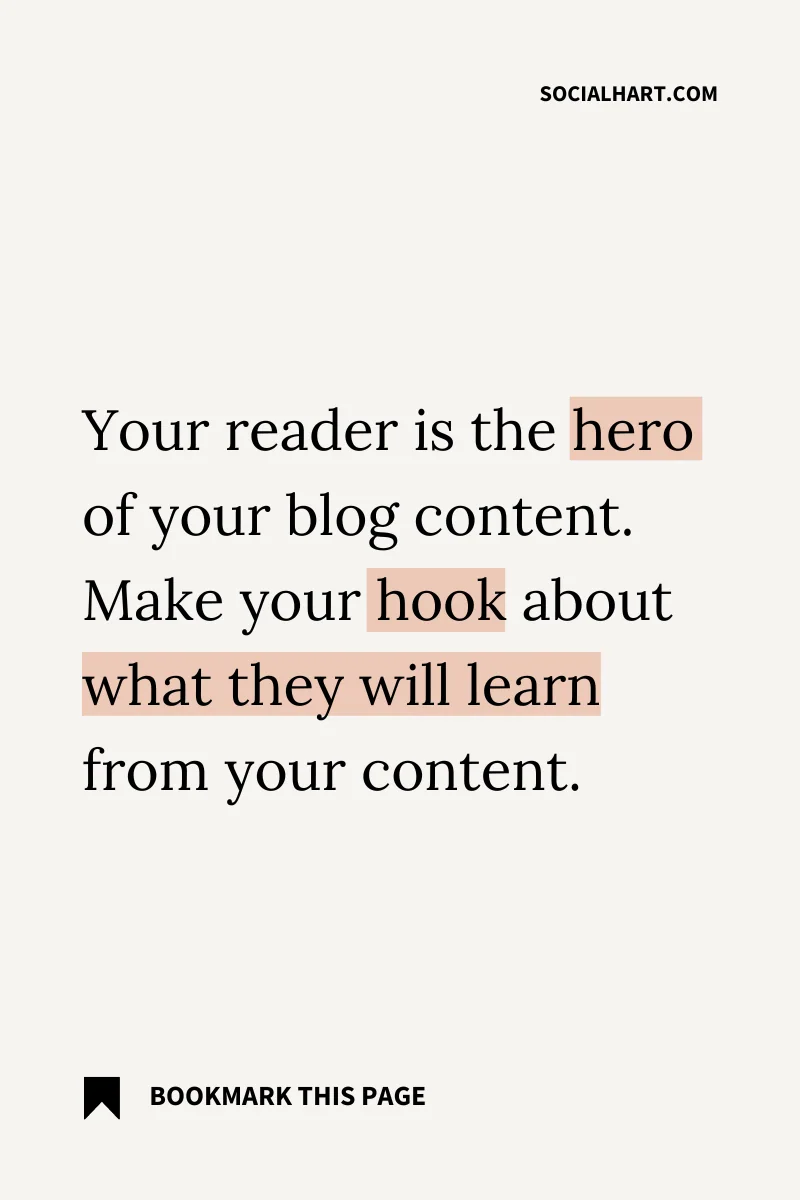
Considering that your reader is the hero in your blog content, take what they will learn and make that what your hook is about.
Here are those same lessons, adapted to show the “hook.”
- Your writing station doesn’t have to be one size fits all. Here are three things to consider about your workspace.
- Keywords don’t make great writing. Here’s the best way to use them for better content.
- Think SEO writing isn’t for you? Here’s the easiest way to get started.
Thinking Through the Problems
It’s also helpful to consider what problems you’re solving for your reader with your content, as this can inspire your hooks.
Think about it, if I told you that I know the secret to creating great content for SEO and all you had to do was read about it right here with these 6 steps, you’d click on it so fast.
Of course, you would! You’ve wanted to write SEO blogs for ages now. All you need is the nohow to get across the finish line.
Now, take that knowledge and think about the problems your clients or customers face. Do their dogs have itchy skin? Do they struggle with finding great clothes that show their personality and establish trust with their clients? Are they looking for connection with a brand that cares about the environment in addition to hydrating skin beautifully?

Considering the problems your customers have will help you solve their problems, and therefore, write better hooks. Focus on how your content helps people solve those problems, and let the hook tell them what you’ll solve.
Knowing How to Track Your Progress
Finally, what good is your content doing you if you don’t know how to track or measure what you’re creating?
Every article plays its part, and in order to truly understand its impact – whether it needs to be improved, tossed, or kept – you need to set up tracking and regularly audit your content.
Crafting Clever Hooks with Socialhart
Work with Socialhart on your hooks, engagement, and crafting SEO content. If you want to show up online for your customers and clients, consider how SEO fits into your long-term marketing plans.
Read How to Track, Measure, and Audit Your Content
Go back to The 8 Stages of Writing Blogs